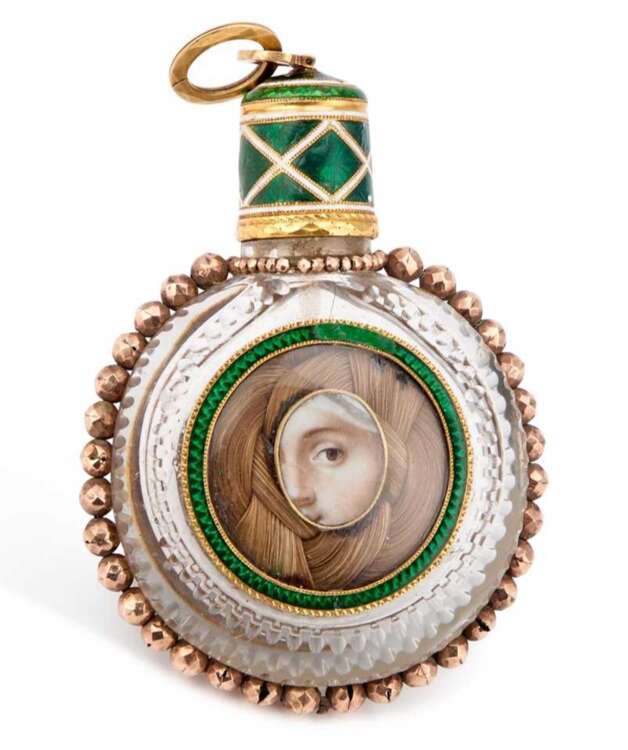
A "lover's eye" is a miniature portrait of a single eye, popular in late 18th and 19th-century jewelry as a secret token of affection. This trend was started by the Prince of Wales, who sent a painting of his eye to his forbidden lover, and it spread among the aristocracy to discreetly convey love, secret messages, or a connection to a loved one without revealing a full face.
The trend began around 1790 with the Prince of Wales (later George IV) sending a miniature portrait of his eye to Maria Fitzherbert, with whom he had an illicit relationship. They were a way for lovers to exchange portraits secretly, as a full miniature was a public declaration. The eye alone allowed for a more private and intimate symbol of affection.The expression of the eye, such as a half-closed eye or a raised eyebrow, could convey hidden messages. Pieces were sometimes surrounded by pearls to signify tears or a deceased loved one. Painted on small pieces of ivory, vellum, or other materials, the miniatures were set into various pieces of jewellery like lockets, rings, brooches, and even toothpick boxes. The fashion faded in the mid-19th century with the rise of photography, which provided an easier way to get a picture of a loved one.